


Introduction
One of the biggest questions businesses face today is this — should you focus more on personal branding or corporate branding?
As a digital marketing and SEO consultant, Aswath Kumar believes that both branding strategies are powerful when used correctly. In fact, businesses that combine personal branding with corporate branding often build stronger trust, visibility, and long-term growth.
In this blog, let’s understand the difference between personal branding and corporate branding, along with practical strategies that actually work in 2026.
What is Personal Branding?
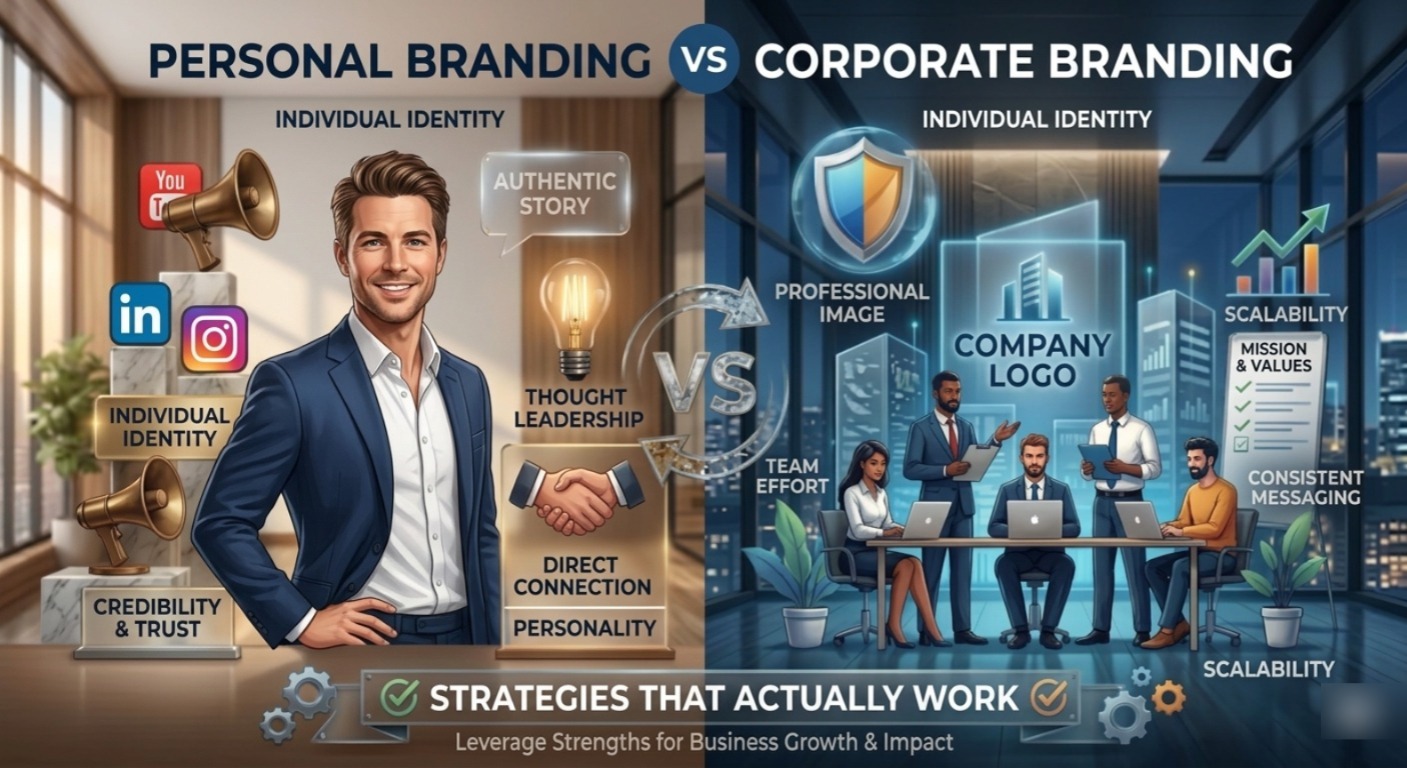
Personal branding is the process of building a public identity around an individual. It highlights your expertise, personality, experience, and values.
Today, people prefer connecting with real humans instead of faceless businesses. This is why founders, consultants, creators, and industry experts are investing heavily in personal branding.
Key Elements of Personal Branding
Building Expertise
Sharing industry knowledge through blogs, videos, podcasts, and LinkedIn posts helps establish authority.
Creating Authentic Connections
Audiences trust people who communicate honestly and consistently.
Maintaining Online Presence
Social media profiles, professional websites, and public interactions shape your personal identity online.
Sharing Your Story
Your journey, experiences, and achievements create emotional connection with audiences.
Benefits of Personal Branding
Builds Trust Faster
People naturally trust individuals more than companies. Founder-led branding often creates deeper engagement.
Improves Social Media Reach
Personal profiles usually receive better engagement rates compared to business pages.
Creates Industry Authority
Consistent content sharing positions you as an expert in your field.
Opens New Opportunities
A strong personal brand can attract partnerships, speaking opportunities, clients, and collaborations.
What is Corporate Branding?
Corporate branding focuses on building the identity of a business rather than an individual. It includes everything from logo design and website appearance to customer experience and company messaging.
Corporate branding helps businesses appear professional, scalable, and trustworthy.
Key Elements of Corporate Branding
Visual Identity
Logos, colors, typography, and design consistency create recognition.
Brand Messaging
The tone, mission, and communication style define how customers perceive the business.
Customer Experience
Every interaction with customers contributes to the company’s brand image.
Digital Presence
Websites, SEO, advertising, and social media play a major role in modern corporate branding.
Benefits of Corporate Branding
Creates Professional Credibility
Strong corporate branding makes businesses appear stable and reliable.
Helps Businesses Scale
Unlike personal branding, corporate branding allows companies to grow beyond one individual.
Improves Brand Recognition
Consistent branding helps customers remember your business easily.
Supports Long-Term Growth
Corporate branding increases overall business value and customer loyalty.
Personal Branding vs Corporate Branding: Main Differences
| Personal Branding | Corporate Branding |
| Focuses on an individual | Focuses on a company |
| Emotion and personality-driven | System and business-driven |
| Builds personal trust | Builds organizational trust |
| Works well for consultants and founders | Ideal for agencies and large businesses |
| Easier audience engagement | Better scalability |
Why Combining Both Branding Strategies Works Best
According to Aswath Kumar, businesses that combine personal branding with corporate branding often achieve stronger results online.
Customers want to trust the company, but they also want to know the people behind it.
For example:
- A founder shares industry insights on LinkedIn
- The company website builds business credibility
- Team members create educational content
- The business showcases customer success stories
This combination creates stronger visibility, trust, and authority.
Branding Strategies That Actually Work in 2026
1. Create Valuable Content Regularly
Blogs, videos, podcasts, and short-form social content help improve authority and SEO visibility.
2. Focus on Authentic Communication
Modern audiences prefer honest and relatable communication over overly promotional content.
3. Invest in SEO and Website Branding
A professional website optimized for search engines improves both personal and corporate visibility online.
4. Use Video Marketing
Founder videos, behind-the-scenes content, and educational reels generate higher engagement.
5. Build a Strong LinkedIn Presence
LinkedIn remains one of the most powerful platforms for professional branding.
6. Maintain Consistent Brand Identity
Consistency in messaging, visuals, and tone builds trust across all platforms.
7. Build Community, Not Just Followers
Engaging with your audience creates long-term loyalty and stronger relationships.
Common Branding Mistakes Businesses Make
In Personal Branding
Inconsistent Content
Posting irregularly weakens audience engagement.
Trying to Copy Others
Authenticity matters more than imitation.
Over-Promotion
Constant selling reduces trust and engagement.
In Corporate Branding
Weak Brand Identity
Generic branding makes businesses forgettable.
Ignoring Customer Experience
Poor service can damage even strong branding efforts.
Lack of SEO Optimization
Without search visibility, branding efforts lose online reach.
The Future of Branding
In 2026, successful branding is no longer just about logos or advertisements. People want transparency, expertise, and genuine connection.
Personal branding creates emotional trust, while corporate branding builds business credibility. Together, they create a strong digital foundation for long-term success.
As businesses continue evolving online, companies that humanize their brand while maintaining professional identity will stand out the most.
Final Thoughts
There is no single winner between personal branding and corporate branding. Both play important roles in business growth.
Personal branding helps build trust and authority. Corporate branding creates structure, scalability, and recognition.
According to Aswath Kumar, the smartest strategy is combining both approaches to create a powerful and memorable brand presence online.
Frequently Asked Questions
What is personal branding?
Personal branding is the process of promoting an individual’s expertise, personality, and professional identity.
What is corporate branding?
Corporate branding focuses on building a company’s image, reputation, and business identity.
Which is better: personal branding or corporate branding?
Both are important. Personal branding builds trust, while corporate branding builds long-term business credibility.
Why is personal branding important for entrepreneurs?
It helps entrepreneurs establish authority, attract opportunities, and connect directly with audiences.
How does SEO support branding?
SEO improves online visibility, helping both personal and corporate brands reach more people through search engines.